
Read the poems here:
The poem sequence In the Valley of the Kingdom: a poetic fantasy presents a vivid, immersive exploration of Kathmandu during the Dashain festival, blending spiritual ritual, sensory experience, and global awareness into a deeply reflective narrative. Structured around the stages of Dashain—from Ghatasthapana to Dashami—the work moves beyond mere description of celebration and instead becomes a meditation on the cyclical nature of life, the duality of creation and destruction, and the search for inner transformation.
At its core, the poem mirrors the ritual progression of Dashain itself. Beginning with Ghatasthapana, which marks the planting of sacred seeds (jamara), the text emphasizes themes of creation and awakening. This sense of emergence continues through Fulpati, where communal and royal traditions unite the people of the Valley in shared anticipation. The later stages, particularly Maha Ashtami and Nawami, intensify in tone, culminating in vivid depictions of sacrifice and bloodshed. Finally, Dashami offers resolution through blessing, renewal, and the restoration of social harmony. This cyclical structure reflects a broader Hindu worldview in which time is not linear but repetitive, governed by rhythms of birth, death, and rebirth.
A central theme throughout the poem is the dual nature of the Goddess Durga, who embodies both fertility and destruction. She is invoked as a life-giving force, associated with flowers, growth, and abundance, yet also as a figure who demands blood sacrifice. The striking imagery of animals slaughtered and the poet savant wading “knee-deep in blood” underscores this paradox. Rather than presenting violence as purely negative, the poem situates it within a sacred framework, suggesting that destruction is an essential counterpart to creation. This duality reflects a worldview in which life is sustained through cycles of offering and renewal, even when those processes are unsettling.
The figure of the “poet savant” serves as a crucial symbolic presence throughout the work. She appears in multiple forms: as a prophetic voice chanting at the festival’s beginning, as a devotee immersed in trance, and finally as a beggar in the epilogue. Her shifting identity blurs the line between madness and enlightenment, suggesting that spiritual insight may exist outside conventional social norms. In her final transformation into a marginalized figure, the poem implies that the divine is not confined to temples or rituals but can be encountered in the most ordinary and overlooked places. This idea is reinforced by the closing encounter with the beggar child, whose simple blessing echoes the larger spiritual message of the festival.
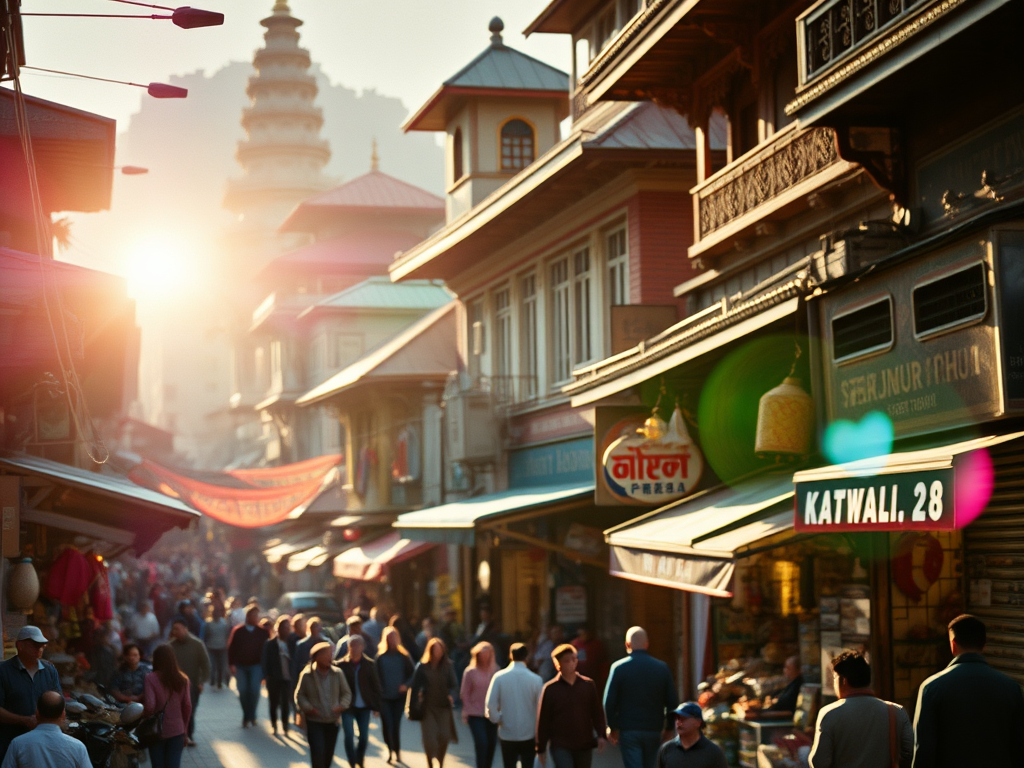
Kathmandu itself is portrayed as a dynamic, living environment where ancient traditions coexist with modern realities. The poem’s rich sensory imagery captures the city’s complexity: the scent of incense and flowers mingles with diesel fumes, while the sounds of chanting, drums, and gun salutes compete with television broadcasts and urban noise. This layering of experiences creates a sense of both immersion and tension, highlighting the coexistence of sacred and secular life. The juxtaposition of crumbling temples with luxury hotels further emphasizes the contrasts within the city, suggesting the persistence of spiritual traditions amid rapid modernization.
Another significant dimension of the poem is its engagement with global suffering. References to regions such as Iraq, Gaza, and Darfur, as well as news of natural disasters and political unrest, interrupt the localized focus on Dashain. These moments serve as a reminder that while Kathmandu is engaged in ritual celebration, much of the world remains marked by conflict and hardship. Rather than diminishing the festival’s importance, this contrast deepens its meaning, presenting spiritual practice as a response to, rather than an escape from, suffering. The speaker’s prayers underscore a sense of shared humanity that transcends cultural and geographic boundaries.
The poem also reflects the unique religious syncretism of Nepal, where Hindu and Buddhist traditions often intersect. Alongside invocations of Durga, the text incorporates Buddhist imagery and mantras, including references to bodhisattvas and Vajrayana practices. This blending of traditions reinforces the idea that spiritual truth is not confined to a single doctrine but can be approached through multiple paths. The emphasis on inner realization, particularly in the more trance-like sections of the poem, aligns with both Tantric and Buddhist concepts of enlightenment as an internal, transformative process.
Ultimately, the sequence suggests that the true significance of Dashain lies not only in its rituals but in its capacity to inspire reflection and compassion. While the festival culminates in the exchange of blessings, symbolized by tika and jamara, the poem’s epilogue shifts attention to everyday life, where spiritual insight must be carried forward. The encounter with the beggar child, who offers a blessing in return for a small act of kindness, encapsulates the poem’s central message: that the divine is present in human connection, and that the triumph of good over evil is enacted not only through ritual but through compassion in daily life.
In this way, In the Valley of the Kingdom transforms Dashain from a cultural event into a universal meditation on existence. Through its blending of vivid imagery, spiritual symbolism, and social awareness, the poem invites readers to consider how cycles of creation and destruction, joy and suffering, and ritual and reality shape both individual experience and the broader human condition.
🌄 1. Big Picture: What the poem is doing
At its core, the sequence is:
- A spiritual journey through Dashain (from Ghatasthapana → Dashami)
- A fusion of Hindu and Buddhist traditions
- A contrast between sacred celebration and global suffering
- A blur between reality and mystical vision
The “poet savant” acts as a symbolic figure—part prophet, part madwoman, part spiritual guide.
🕉️ 2. Central Themes
A. Cyclical Ritual and Sacred Time
Dashain unfolds step-by-step, and the poem mirrors that structure:
- Ghatasthapana → creation, planting life (jamara)
- Fulpati → royal and communal unity
- Maha Ashtami / Nawami → sacrifice and intensity
- Dashami → blessing, renewal
This reflects the Hindu idea of time as cyclical, not linear.
🩸 B. Creation and Destruction (Durga’s dual nature)
Durga is shown as:
- Life-giver (fertility, jamara, flowers)
- Destroyer (blood sacrifice, slaughter)
Example:
“She hungers for the very essence of creation .. for the blood…”
And later:
“Knee-deep in blood…”
The poem emphasizes that:
👉 Violence and renewal are inseparable in this worldview
🌍 C. Local Ritual vs Global Suffering
The speaker repeatedly contrasts Kathmandu with the outside world:
- Iraq, Gaza, Darfur
- News broadcasts of war, disasters
This creates tension:
👉 Sacred joy exists alongside global pain
It suggests:
- Spiritual rituals don’t erase suffering
- But they offer meaning, structure, and hope
🧠 D. Inner Transformation / Mysticism
The experience becomes increasingly internal and hallucinatory:
- Trance states
- Visions of gods
- Dissolution of reality
Lines like:
“world in between worlds”
“choose between Truth and illusion”
This reflects:
- Tantric and Vajrayana Buddhist ideas
- Enlightenment as inner realization, not external ritual
☯️ E. Unity of Hinduism and Buddhism
Kathmandu is portrayed as spiritually blended:
- Durga (Hindu)
- Vajrapani, Kuan Yin (Buddhist)
- Mantras from both traditions
This reflects real Nepalese culture:
👉 Religious boundaries are fluid, not rigid
🧍 3. The Poet Savant (Key Symbol)
She appears throughout in different forms:
- Prophet-like chanter
- Devotee in trance
- Observer of rituals
- Beggar in the epilogue
She represents:
1. Spiritual consciousness itself
Always present, shifting forms
2. Madness vs enlightenment
Is she insane—or awakened?
3. The marginalized divine
At the end, she becomes a beggar:
👉 Suggesting divinity exists among the overlooked
🏙️ 4. Kathmandu as a Living Space
The city is vividly portrayed through sensory contrasts:
Smell:
- Incense
- Flowers
- Blood
- Diesel fumes
Sound:
- Chanting
- Drums (madal)
- Gun salutes
- News broadcasts
Sight:
- Temples vs luxury hotels
- Ritual vs traffic chaos
👉 Kathmandu becomes:
a meeting point of ancient ritual and modern disorder
🩸 5. Violence and Sacrifice
The tone shifts dramatically during Nawami:
“Knee-deep in blood”
This is not metaphorical—it reflects real Dashain practices (animal sacrifice).
Meaning:
- Violence is ritualized
- It ensures protection and blessing
But the poem leaves it ambiguous:
👉 Is this sacred necessity—or disturbing excess?
🧘 6. Spiritual Climax: Silence and Darkness
Key turning points:
- Electricity cuts → silence → puja begins
- Maha Ashtami → trance and dissolution
- Kal Ratri → darkness, death energy
These moments show:
👉 True spirituality happens beyond noise and modern life
🌼 7. Resolution: Dashami (Blessing and Return)
The tone softens:
“Namaste.”
Now the focus is:
- Family
- Blessings (tika, jamara)
- Continuity across generations
This contrasts sharply with earlier chaos:
👉 Order is restored
🧒 8. Epilogue: Reality Returns (But Changed)
The final scene is crucial:
- Busy street (Freak Street)
- Beggar child
- Simple blessing
The child says:
“May Good transcend Evil…”
This mirrors the entire meaning of Dashain.
👉 Key idea:
The sacred is not in temples—it’s in everyday human encounters
🎭 9. Style and Techniques
A. Stream-of-consciousness
- Blurred reality
- Sudden shifts in time/place
B. Repetition (mantras)
“I invite the Lord into my heart”
→ Creates trance-like rhythm
C. Sensory overload
- Mirrors festival intensity
- Immerses reader in Kathmandu
D. Juxtaposition
- Sacred vs modern
- Local vs global
- Beauty vs brutality
🧩 10. Final Interpretation
This poem suggests:
👉 Dashain is not just a festival—it’s a cosmic process involving:
- Creation
- Destruction
- Renewal
- Compassion
👉 Kathmandu becomes a microcosm of the world:
- Spiritual depth
- Social inequality
- Global awareness
👉 The ultimate message:
Divinity is not confined to ritual—it lives in compassion, suffering, and human connection.
Leave a Reply