

Obituary of Albert Russo
March 1, 2026
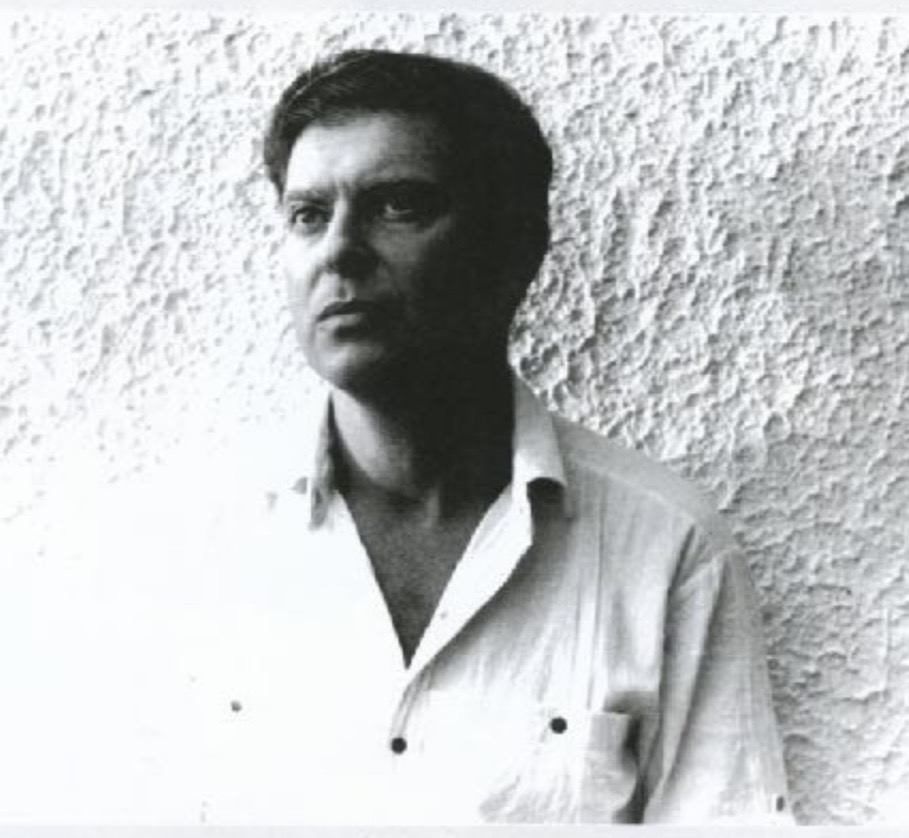
Albert Russo was born on February 26, 1943, in the Democratic Republic of Congo to a Sephardic Italian father and a British mother. He grew up in Rwanda, Burundi, Zimbabwe, and South Africa.
Albert studied at New York University, spending eight years in New York, then nine years in Milan, Italy, before living one year each in Belgium, Switzerland, and Germany, and forty years in Paris. He later settled in Tel Aviv, Israel, where he left this world for eternal life on January 15, 2026. French and English were his two “mother tongues,” and he also spoke fluent Italian, Spanish, and German, as well as Swahili and Hebrew. He described himself as a man without a designated country but a citizen of many lands, comparing himself to an aquatic plant whose many roots extend out of the water.
A prolific writer, Russo authored more than one hundred works, including novels, short story collections, poetry, essays, and articles, as well as numerous volumes containing his cherished photographs. His work was published in English, French, and Italian and translated into a dozen languages. A passionate photographer, his award-winning images were exhibited at the Louvre Museum as well as in Times Square in New York, and in India, Russia, and Switzerland.
A beloved father and grandfather, Albert Russo is survived by his beloved daughter Tatiana, his devoted son Alexandre and their children, as well as his life partner, Bernard.
— Jeanette Skirvin
Jeezette Alberico Binetti, Unky Berky!
When they told me that Goddess Almighty had hummingbird-feathery whispered your name in a dream to climb the glowing halogen ladder to Everland, I was so flabbyghosted that I cried my lil eyeballs out like Niagara ceaseless-Falls! Hickory, mystery, hector and tommy I thought they would call for a sigh-kayak-tryst to dam the tears before my whole head ran dry. I am ok now, Unky Berky, though I’m still vely vely sad that you left me behind without telling me. We always went everywhere together before.
Did you Wikipipipeadric your new destination, its maps and populations like you always nagged me to commit to memory before leaving on our sojourns? Did you remember to pack your compass, and all your silly forks and ding dong languages? Washmore, did you remember to pack all 31 flavors of your favorite ice cream and Passport? Did Customs conduct their usual searches? Sfars I’m concerned, Goddess Almighty should have met you at the gate and intervened since it was at Her invitation that you traveled up that big ladder in the first place! Maybe She did?
I promise not to call you Bonka ever again because now that you moved up into Everland, you won’t get on my bloomin nerves anymore. I know you are safe in your new second life because I hear your voice in my memories. I have more than an inkling ding-a-ling that I will be alright here because even though I haven’t peeked into your room yet, I have a wee bit supertissueimpreshun that you left your keys on the dresser for me.
I already miss you doubly, trebly and terribabbly much. All this is why in my heart of artichokes I looove you so much. You have the biggest heart.
— Zapinette (Esmeralda McInnerny)

Albert: Why his work is important
Albert Russo’s work is important because it consistently transcends the boundaries that tend to confine national literatures—whether linguistic, cultural, or geographic—and does so from lived experience rather than theoretical distance. Writing in several languages and shaped by formative connections to Africa, Europe, and the United States, he explores the psychological and emotional dimensions of displacement, hybridity, and postcolonial identity without reducing them to simplistic moral conclusions. His fiction often examines the meaning of belonging in a world structured by migration and historical imbalance, offering readers a close look at characters grappling with divided inheritances and overlapping loyalties. His writing thus participates in a broader reconfiguration of contemporary literature, in which identity emerges not as fixed, but as an ongoing—and often uneasy—process of cultural negotiation.
His commitment to stylistic diversity and ethical reflection is equally noteworthy. His narratives frequently move away from linear realism, employing polyphonic forms, interior monologue, and shifting perspectives—techniques that reflect the instability of the realities he portrays. By placing marginalized voices at the center and highlighting the enduring effects of colonial legacies, his work opens dialogues about race, memory, and belonging that extend beyond literature into social and political thought. Taken as a whole, his body of work offers far more than storytelling; it constitutes a sustained reflection on the intertwining of personal and collective histories, making his contribution especially relevant in an age marked by transnational mobility and cultural interdependence.
— Adam Donaldson Powell

Albert: The Man and the Phenomenon
Albert Russo’s personal and political values are inseparable from the transnational trajectory of his life. He was not concerned with being politically correct, and his positions on many issues were provocative and often perplexing to those who struggle to grasp nuance or to hold two seemingly opposing ideas in mind at the same time. Albert rarely engaged in public polemics or interpersonal conflicts; rather, he expressed himself fully in his writing, quietly raising storms from his literary pulpit and leaving it to the reader to confront and compare their own values with his.
His lively mind fueled his constant resistance to rigid identity politics, racial hierarchies, and nationalist exclusivism. In both his personal commitments and literary practice, he privileged intercultural dialogue, individual dignity, and freedom of expression over ideological conformity. His worldview reflected the conviction that identity is fluid rather than fixed, and that ethical responsibility begins with recognizing the shared humanity that persists beyond historical and geopolitical divisions.
Albert Russo may be understood as a representative voice shaped by—and responding to—the political upheavals of the twentieth and twenty-first centuries. His writing explores the emotional and moral complexities of exile, migration, and belonging, while confronting the legacies of social control and cultural dislocation. Rather than proposing programmatic political solutions, his work tends to dramatize the lived contradictions of modern experience, making empathy a form of resistance to both historical amnesia and contemporary intolerance.
These values influenced his personal relationships as much as his literature. He was not antisocial, but writing always came first. He wrote with passion and with a kind of frenzy. When he ultimately gave up his dream of winning the Nobel Prize in Literature, he nevertheless continued to compete for other distinctions. He wrote incessantly, because as long as he was writing, he felt alive and powerful. And yet his genius with words and his immersion in his books also allowed him to escape uncomfortable social interactions, sometimes precipitated by his own insatiable desire for fame. If he had a flaw, perhaps it was this: flying too close to the sun.
— Adam Donaldson Powell

Comments from family, close friends, and colleagues

Tatiana Russo, daughter
Albert Russo (1943-2026)
My father, Albert Russo, passed away peacefully on January 15, 2026.
To the world he was a prolific writer – a novelist, poet, essayist and photographer whose work crossed languages, continents and cultures. To me, he was first and foremost my father: a man of immense curiosity, independence of spirit, and an unwavering devotion to words.
Born in 1943 in Kamina, in what was then the Belgian Congo, he carried Africa within him for the rest of his life. The landscapes, the people, the complexities of colonial history and identity all found their way into his writing. His books – written in both French and English – reflected a lifelong attempt to understand the human condition in all its contradictions.
Writing was never simply a profession for him; it was his way of being in the world. He wrote constantly, passionately, and fearlessly about subjects that mattered deeply to him: identity, tolerance, injustice, love, exile, and the fragile beauty of human connection.
But beyond the books and the ideas was a man who lived intensely – curious about people, about cultures, about life itself. He loved conversation, debate, travel, and the freedom to think and express himself without constraint. And he possessed a wonderful sense of humour – sometimes mischievous, often sharp, always intelligent – which made time with him lively and unforgettable.
For those who knew him well, he was many things: provocative, generous, unconventional, humorous, and fiercely independent.
For me, he was a father whose life was defined by imagination, intellectual courage, and an enduring love of language. His voice – in conversation and on the page – will continue to resonate through the many stories he leaves behind.
I will always hear that voice – curious, witty, and full of life – in the pages he leaves behind and in the memories we shared.
— Tatiana Russo
________________________
To my Albert,
You were the love of my life.
I miss you terribly.
I spent 32 years with you and it was wonderful.
I will never forget you.
You will always be in my heart.
Your Bernard
__________________________
David Alexander (author, colleague and friend)
I first met Albert Russo in Paris at a Comfort Inn on the Left Bank. It was off Place Blanche near Place Clichy, close to the Moulin Rouge and neighboring dive bars, amidst which Jim Morrison’s heart stopped on coke and strangers carried back his corpse and dumped it in his bathtub. Pig Alley, the GIs called the area, after the adjacent Place Pigalle. It was my late wife who’d introduced us, she who’d become acquainted with Russo through the litmag scene. We’d met him down in the hotel lobby. It was a long time ago.
Now, as then, I view Russo as the outsider in virtually every regard, including being an outsider to big publishing (or is that pig publishing). I see this ur-nature as the foundation stone of his life and his work, certainly in his signature work, Mixed Blood, and again in one of his most recent and most soulful novels, And Then Came David Kanza. An outsider as both a white child and the offspring of refugees from Nazi and fascist persecution in Africa; an outcast because he turns gay; an outcast as an expatriate in all but having an actual country to be expatriated from, living in Paris among what Russo always called “the French,” to distinguish them from himself and a literary expatriate for all the reasons cited by reviewers in “Crystals,” Russo is the perennial dog in the manger. But so am I. And this is the age of the manger dogs, surely enough.
A few years ago, I drove Russo around Brooklyn by night. Russo understood and could appreciate the stark beauty in the darkness beneath the McDonald Avenue Elevated as I sat behind the wheel with Russo and his long-time companion Bernard in the back seat. The desolate spaces broken by the intermittent rumbling of the trains clattering across the tracks overhead as they pulled in and out of stations, the dark, shutteredstorefronts, the greater sense of desertion opening up as the El stretched away toward the last stop at Coney Island, he saw this as I did.
This was no “Coney Island of the Mind” as touted by Ferlinghetti, this was nodreamily beatific place. It was a real place. It stunk. Sparks fell down on car hoods when the F-train rumbledoverhead, ruining paint jobs, spattering windshields. Cops cruised the night, ready to bust your head for anything they could invent. You might run over a cat or a mental case if you weren’t careful. It passed Washington Cemetery, throughwhich we “FDRians” once walked to the subway from Franklin Delano Roosevelt High School, a place where I received awards for student literature, which I promptly tore up.
Only a few weeks ago, in the midst of the worst New York City August in living memory I again thought of Russo as I stood at one of those “shops” – automotive garages — on the sidewalks below the El. I was among the working class now, rough men with calloused hands, immigrants from Russia and Italy, who spent their lives working cars and iron, who knew the streets of Brooklyn for what they truly were.
My friend was a self-styled, self-described “punk from the gutters of Naples,” but he was my friend, and he was no punk, and he let me wash my car and do some mechanic work on it. He and his partner embarrassed me, boasting that I was a writer to the other working class types on the streets. I was embarrassed because their pride in knowing me — the writerly likes of me — was genuine. Nothing feigned. Nothing I could say would change their pride. I was something to them; somebody.
Yet I felt the same about them. My ex-Neapolitan “punk” friend who worked on cars for a living had learned not only to speak idiomatic English fluently but had learned the rudiments of Russian, Spanish and Portuguese as well. Plus he could take all the dents out of a wreck in less time than Russo or I could write a sonnet. Neither of us could believe the other. Compared to them, I’m the Dalai Lama. I also forgot to add that he makes his own wine.
Writers talk about the “New Grub Street” syndrome. This relates to 19th century British author George Gissing’s signature work in which the author’s rather wistful longing — one that must of course remain eternally unfulfilled and a source of constant and unendurable suffering — to become a grubby workman with calloused hands is winsomely expressed. Gissing’s lament has echoed across decades and across oceans; yea, even across Brooklyn.
I once journeyed to London’s Camden Town, near where Gissing had kept his sorry little garret, mainly to get a gut feel for the way Gissing lived and worked. There were a lot of hippies around and we had lunch on an overpriced canal boatnegotiating the locks on the Regent’s Canal.
But, not to digress. I consider myself lucky. My hands are already calloused from working on cars. I already spend time lying across the sidewalks of McDonald Avenue with a socket wrench in my hands and Pennzoil on my face. I write with a light heart, knowing I can give the shit up anytime I want. Hoisting engines off their mounts, disassembling, cleaning, then reassembling them — that’s a lot like writing. Maybe better in some ways. Of course, that’s what Maugham advocated in The Way of All Flesh. Fuck the writing and get into something real. Whatever, just fuck the writing. Interesting message for a novel, wot? If you saw my feet sticking out from under a car on McDonald Avenue, I bet you wouldn’t know there was an author’s head at the other end. Again, dear reader, Maugham said it long before me, and his estate still collects royalties.
Albert understands this too. His novels seem more and more to delve into the heart of his own darkness in telling the stories of his life, even if some of them are allegorical, or lightheartedly told, such as Zapinette Video. Authors, including myself, must write comedic works if they expect to stay sane long enough to continue writing serious works. As Russo’s fictional David Kanza tells — and as Russo related to me personally — his familyorigins were bourgeois. He comes not from artists or artisans, but from hardworking businessmen, even factory hands. I think Russo and I could run a repair shop together on McDonald Avenue and learn to like it. I mean this seriously.
After driving Albert around Brooklyn, I walked with Albert around Manhattan. We walked through Chelsea and into the Village, and then we walked around the Village. I used to cut class from FDR High, take the F-train that still runs along the McDonald Avenue El, and get off at West 4th Street and Avenue of the Americas, then walk toward the East Village.
There were head shops then, a lot of them. I still have a trinket of tarnished silver I bought in one of those long ago. It looked to me then like some stoned version of a G.I. dog tag. Only recently I stumbled onto the fact that it was the symbol depicted on Archimedes’ grave — the sphere embedded within the cylinder, symbol of universal harmony. I still wear it sometimes. I’ve never cleaned it. I prefer the silver tarnished to the black.
But Russo didn’t know any of this. He just dug the Village scene, en passant, as we walked. The cordoned-off streets near Herald Square, blazingly lit by klieg lights, courtesy of Mayor Bloomberg, whereasthe unlit city housing projects in Coney Island are dark, with yellow hazard tape marked “Police” sometimes strung across their entrances to commemorate recent shootings, and the hallways defaced with graffiti. Russo dug the bookshops and souvenir places and the last record shops in the City of New York, filled with shelves of books and CDs that nobody apparently ever bought or read.
Yes, Russo didn’t know any of this — just as, when I’d first met him, I hadn’t known about the Boulevard du Montparnasse as I walked from Place Blanche and crossed the Liberty Bridge from one end of Paris to another. Outsiders. But we sensed higher truths. We had no direct knowledge of these worlds – these new planets spinning beyond our ken (pace John Keats); but we knew the core truths, as crystals in a shock wave understand the forces that create them, distort and malform them, yet at the same time give them perfection of form. One day I’ll show Russo around the projects, the Nostrand Houses in southern Brooklyn to start, then the Mitchell-Lama houses that march across Luna Park in Coney Island like red brick Goliaths.
One day I’ll take Russo walking along Church Avenue, where, as we passed in my car, the dark-skinned men in shalwar kameez, late of Karachi, swarmed in the night, near the mosque at the corner of East 9th Street, and reminded him of the violence in the city of Paris in which he lives, but whom in Brooklyn are just victims like the rest of us, no more, no less.
Despite his recognition of the presence of evil in the world, and of its antithesis, as well as of his big-hearted compassion, there isn’t a word (at least nothing I’ve discerned in decades of reading his work) of a direct understanding of what it’s like to live a life from whose beginnings one is beset by the mindless, burning hatred of morons and human pork on the hoof who, though beneath one’s contempt, surround you like swarms of vermin and who — from the first brutal awakening to the unbridled evil in their souls — you know you must fight against or go down and be eaten alive, without pity or remorse.
I learned about these latter-daymorlocks the hard way, as a first-generation American born of parents who had come here with nothing, not a cent in their pockets, who knew nothing of the society they had entered, who slaved in the sweat shops of Manhattan and Queens for next to nothing.
No, Russo knows nothing of this that I can discern. Yet, he knows all about it. His knowledge of such matters is something like that of the Dalai Lama, in fact compared to me Russo is the Dalai Lama — bearing the seven markings of Bodhisattva-hood from birth, destined for a life of comfort and ease.
On the contrary, instead of fightingback, his characters always yield, and often yield without — or having suppressed — conscious awareness, as in several seduction scenes, heterosexual and homosexual, which play themselves out throughout his books. Such acquiescence is totally alien to me who made a personal choice — based on what I knew then was an irresistible conviction of its rightness — to fight back and never,ever, give in. Possibly Russo was never faced with the dire consequences of giving in to aggression (sometimes masked as sexual seduction or psychic dominance) whereas those consequenceswere from the first very plain to me.
For example, if I fought back yet came home injured, my clothes torn, my hands and knees bloodied, my skull swollen from having made violent contact with the concrete pavements of Brooklyn — and these in the cases where I emerged victorious in fights — I was all to well aware that not fighting back would have resulted in more serious injury. This it did in other cases, where children were sometimes fatally injured in those same Brooklyn schoolyards.
Under the McDonald Avenue El with the Dalai Lama
A Review of Crystals in a Shock Wave
by David Alexander
(Adapted from an essay written in 2012 on Albert Russo and his published works)
_____________________
Jeanette Skirvin (author, colleague, friend, and Albert Russo Memorial creator)
… from 17 Fife Avenue, NYC, poem by Albert Russo
“… that of 17 Fife Avenue and its magic moments, I now believe that memory is the only treasure a man can hold onto not that I deny all the rest…”
Upon receiving word of Albert Russo’s passing, he has been shaking my brain and bones. I too, have been restless in the nights as Albert’s literary voice runs through my head in and out of my ears in circles spinning as the dirt devils twirl across my Mojave Desert. Alas I’ve succumbed to the morning’s upswing, filled my cup to brim of seriously black espresso and ready to write on the Wall of Reminiscence my memorial to our cherished colleague, Albert Russo.
I never met Albert in the flesh or had the joy of sharing our conversations in audible tones. It is his thoughts scripted in ink that echo in me. We met on the trendy Social Media rail, me having liked and commented on excerpts Albert posted of his books. After a while, Albert responded to my comments by writing, “You remind me of my irreplaceable and beloved mother. Yes, it’s amazing how similar you both are and unique. She must be speaking to you from where she is. I beg her to get in touch with me. She probably does it through you. Maybe that’s how she is talking to me.”
We collaborated on many projects editing and creating literary works via our emails and their attachments. Then after some years had passed Albert challenged me to write a four-hand concerto novel with him, TEL AVIV’S ETHIOPIAN QUEEN, exchanging character’s dialogues, scripting alternating paragraphs in phrases mirroring one another’s style in such a way that no reader or reviewer could discern which one of us wrote which chapter, what lines, and who finished each other’s sentences. It was the hardest best of our times.
Albert wrote this message to me on November 5, 2015, from Paris at 4:24 in the morning.
“Why don’t you reside next door to me??? I can’t live without your words anymore; this is called fairytale folly. Oh, do I need your breath, your smiles, your openness.”
Hang tight in that paradise you are in, Albert-beloved. I’ll be along in time. I need you to show me around.
— Jeanette Skirvin
_____________________
Fabio Croce (publisher, agent and friend)
In 1998, I launched an openly LGBTQ publishing house because Italy lacked publications that freely addressed the issue. One of the first writers to contact me was Albert Russo. I had offices in Piazza Madonna dei Monti in the center of Rome, and it was there that he visited me for the first time.
I was overwhelmed by his enthusiasm, his positive energy, his desire to produce literature. He gave me several of his books, written and published in English and French, some of them successful, praised by major names in world literature such as James Baldwin, Edmund White, and Toni Morrison.
He put me in touch with a precious friend of his in Milan, Gabriella Baldanzi, who dedicated herself for years to translating his texts into Italian.
I then visited Albert and his partner Bernard in Paris, and in 2002 I began publishing his first novel, “My Father’s Lover.”
Albert was thrilled and increased his trips to Rome to attend events where he could share his story with the Roman public. He loved Rome and Italian food, and we had a blast socializing with me and my friends: he was a man who socialized with great enthusiasm and charm.
He appointed me as his literary agent in Italy, and I managed to get his most important novel, “Sangue misto,” published by a major publisher like Elliot.
Edizioni Croce later published “Shalom Tower Syndrome,” “Io, Hans, Figlio di Nazisti,” “Sotto il picco del diavolo,” and the recent “Nel cuore ebreo dell’Africa nera.” Furthermore, in over 20 years of continuous collaboration, I published the entire series of stories dedicated to the character of Zapinette, about 20 funny and self-deprecating novellas in which Albert portrayed himself as a capricious girl spoiled by her gay uncle, who took issue with everything he saw as the ugliness of humanity.
In recent years, I had not fully agreed with Albert and Bernard’s decision to sell their house in Paris, a city they claimed had fallen into the hands of violent and ignorant Arab fundamentalists, to move to Tel Aviv, where I privately envisioned a worse future than Paris, where conflicts would be even more acute. Every time I saw Albert, I insisted that he settle in Rome, at a time when one could still buy a house at a reasonable price: today, that’s no longer possible.
He always showed me enormous affection, exaggerated respect, and boundless generosity. He granted me significant international benefits that, without him, I would never have dreamed of.
I regretted not having him by my side in Rome during his final years.
He was willing to pay for all my expenses just to have me as a guest in Tel Aviv, but I didn’t want to join him for personal reasons, both health-related and political. I avoided setting foot in two countries I’ve never loved: the United States and Israel. And in this, we were very different! But we loved each other deeply and were truly great friends, as rarely happens.
I still have the satisfaction of having been his favorite publisher in the world.
— Fabio Croce, edizionicroce
_____________________
Richard Mathews, (literary colleague, writer and friend)
I met Albert when he and Bernard were on a long vacation in the United States and rented an apartment near my husband and I in 2019. Our mutual friend, Adam Powell, introduced us. Albert and I immediately recognized a kindred spirit in each other. Our conversations before and during dinner were often conducted in French to accommodate Bernard, and I translated for my husband, Jay. We discussed many topics, including our respective lives, but always focusing on literature and art. Even before meeting Albert, I had developed a deep respect for his literary and photographic achievements, having read and studied many of his works, thanks again to Adam’s references. Meeting Albert, I found a kindred spirit—human, sensitive, and highly intellectual. Some time after Albert and Bernard returned to France, I received an email from Albert asking if I would be interested in doing a new translation of The Little Prince for a publisher with whom Albert often collaborated. I accepted immediately.
Albert contacted me soon after my translation was published, asking if I could help him organize, revise, and proofread his latest work of fiction. I gladly accepted, and as the project neared completion, he suggested I write an introduction. That short essay thus became my second published work, in the volume initially titled “Three Colors of the Rainbow.”
With Albert and Bernard’s move to Tel Aviv, our contact became rarer, though I wrote regularly out of concern for how they were faring during the bombings and subsequent calamities.
Albert was driven to write, just as a great dancer is driven to dance, a painter to paint, a singer to sing. With his passing, the world of letters has now diminished. I will remember Albert as a generous and thoughtful friend, whom I was privileged to meet and work with, even though he was nearing the end of his brilliant career.
—Richard Mathews
_____________________
Adam Donaldson Powell (author, colleague, friend, and Albert Russo Memorial creator)
I met Albert over twenty years ago through cyberwit.net. We both admired each other’s writing and quickly formed a ‘team.’ Being transnational and multilingual writers strengthened our bond. We helped each other proofread and edit, shared writing suggestions, wrote introductions and reviews of each other’s books, and co-authored “Gaytude.” I eventually wrote “Under the Shirttails of Albert Russo.” Albert was a workaholic and insatiable. The amount of work he gave me was almost overwhelming until I learned to say “no,” and when necessary, “Hell, no!” Lol, he could be a nagging taskmaster at times. I have edited and read tens of thousands of pages of manuscripts, mediated on his behalf in conflicts with other authors and publishers, explained his politics to publishers and critics, and defended him when he was unfairly criticized by misguided reviewers. He also corrected and revised my French poetry and prose. We were close, and we loved each other. I was his angel and protector, and he was mine. My world isn’t the same without Albert.
— Adam Donaldson Powell

Albert leaves behind many treasures — among them his prize-winning literature and his gift for photography. Yet we remember, too, one of his deepest loves: his beloved Bernard. We mourn with you, B., and hold you in our thoughts and prayers.
Dear Bernard,
I was deeply touched by your beautiful words in the obituary. They will undoubtedly bring Albert much comfort. As an elderly person myself, having lost both my parents and my life partner, I deeply understand your pain and offer you my most sincere condolences.
There are so many emotions to process at such times, and the loneliness that accompanies grief is often difficult to accept. I am, however, convinced that the message you are sending to Albert and to the world will help you, little by little, to find your way through this ordeal.
May God bless and protect you.
Adam

Bernard and Adam in Tel Aviv
__________________________
Dr. Santosh Kumar, author, literary critic, and publisher, Taj Mahal Review
Excerpt from his book:
Adam Donaldson Powell: the Making of a Poet
I shall never forget the evening of September 2008 when I met Powell and Russo first time in Oslo, the evening when I by Grace of God talked to these great poets. It was a miracle, almost incredible to meet Albert Russo, the bilingual author, who writes in both English and French, his two ‘mother tongues’. The occasion was my visit to Oslo in 18-20 September 2008 to attend WORDS – one path to peace and understanding. This international festival was arranged under the auspices of the cultural organization Du store verden!/DSV. The festival WORDS was a grand success due to extraordinary efforts of Eli Borchgrevink, Managing Director of Du store verden!/DSV, Adam D. Powell, Diane Oatley and others.
I am highly obliged to Albert Russo for writing an excelent Foreword to my book. He is the recipient of many awards, such as The American Society of Writers Fiction Award, The British Diversity Short Story Award, several New York Poetry Forum Awards, Amelia Prose and Poetry awards and the Prix Colette, among others. He has also been nominated for the W.B. Yeats and Robert Penn Warren poetry awards. His work, which has been praised by James Baldwin, Pierre Emmanuel, Paul Willems and Edmund White, has appeared worldwide in a dozen languages. His African novels have been favorably compared to V.S. Naipaul’s work, which was honored with the Nobel Prize for Literature in 2001. He is a member of the jury for the Prix Européen and sat in 1996 on the panel of the prestigious Neustadt Prize for Literature, which often leads to the Nobel Prize. It was a wonderful opportunity to meet these two finest poets.
«Kol Nidrei» the powerful prayer of Yom Kippur:
«So much of human wrongdoing – our own and that of others – emerges out of weakness or fear or even mistaken good intentions rather than a desire to do wrong for its own sake. This is true, as well, for promises and commitments we fail to uphold. This doesn’t make it right, and we must indeed recognize these as mistakes, take responsibility for them, atone for them, and take real steps to avoid them in the future. Nevertheless, recognizing human frailty as a central part of the wrongs we have done and those done to us by others is a crucial step toward making forgiveness and reconciliation possible.» — JTS

Leave a Reply