
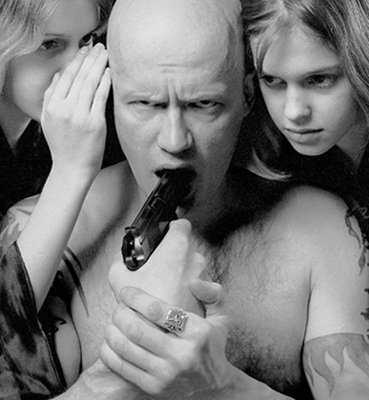
Photo: Adam Donaldson Powell
WHISPERS….
I
Differentiate dream from vision: I heard a voice
telling me it was
so softly
in whispers become fingers insistent each
a separate story in whispers become
a hand coming to rest assurance
on my brow smudging wrinkle away from shadow
Shadows become whispers
sliding into sleep, dreams descending
to a new crescendo to vision turning
on its heel and reminding
in whispers as indifferent as relentless
as ocean waves
going about the business of being ocean waves.
II
SPLASHING whispers gone amok;
red paint SPLATTERED on white sailcloth ..
one green eye and one brown
talking with one another
but without seeing;
leaving me DISJOINTED but not perplexed.
My dream-catching whispers are now
quite rambunctious and I’m feeling rather
PURPOSELESS while
GASPING for words on the edge of an eternal
moment for moment
flirting with smothering cobwebs ..
TURN ME LOOSE!
You’ve shown me more than my whisper can digest.
You’re falling far .. far past the point of
being in love with yourself and
I want to cry more but
my tears have given way to
HOARSE, LICORICE WHISPERS.
Turn me loose … turn me loose ..
A pale oyster-moon has just slithered past
the sweet nothings and penetrated my inner ear
STOP …. PLEASE
III
Don’t speak.
SHHhhhhhhhhhh……………
“Speak softly,” my conscience says.
There is no room for doubt in such proximity and
waking hours spent running and arranging and defending and
composing and planning and
(GRUNT)
Sometimes I think that our sounds don’t
really match anymore …
a mad woman running from place to place in sensible shoes falling
asleep on buses and subways snarling
at old ladies coming too close with their dripping …
If only men
could bleed for love
as only women can … perhaps
then I could surrender to your whispering.
You do still hear me, don’t you?
Umbrellas. THEIR
LARGE BIRDS’ MOUTHS open and shut open and shut in silence.
You stalk my emotions, steal my words ..
(Openings rest there near rapture.)
SHHhhhhhhhhhhh…….”Don’t speak,” you say.
Fuck off …
Meanwhile an honest feast takes place unperturbed
in the moonlight.
Just because you’re not actually being
followed doesn’t necessarily mean that you
don’t have a right to be PARANOID.
Hey! Are we talking about your experience
of my words …….. or mine of yours?
I
CRASHED
but nobody noticed my shadow mingled swiftly yet another meek
whistle
among their own; they went right on eating.
I just want to SCREAM In silence.
SHHhhhhhhhhhh…………… WHAT?!!!
IV
All I do is salvage the remains and begin again A Broken Child
teeters with epileptic balance
down along the sidewalk. Paranoia reduced to one
crystal fragment fractured and reeling in umpteen patterns,
each collecting and then returning
whispers
in its own fashion. I can’t
catch up with it: it shifts
quicker than I can move quicker than
the frenzy of my thoughts. Shiny white minnows fly
into sight like mirrors, now gone
missing.
TIT FOR TAT this for that Heads
Nodding in implied
Consent PUPPETS not the thing like
the thing itself. We accept this
deception
and ravenously A broken room and all the while
the heart beats a dogged rhythm.
V
I get spooked when you corner me inside myself;
especially when you whisper those seductive,
unspeakable psychological assessments
against my ear-drum ..
tango-like rhythms bouncing
in a stilted, jerking fashion
I follow your lead
’round and ’round, closer and closer until ..
Our precarious showdown brings us
face-to-face with insecurity and dream.
An orchid unfolds an insistent
vermillion informs
pink petals distended
.. endings mute into beginnings ….
Screeching, flamebreathing dragons soar low over
violated plains of brainmatter.
As silk upon iron. Vibrato persists
confused but undaunted as wings span
a trembling distance
Fires of fear incite waves of internal uproar to sear the
ulcerated lining of delicate abdominal tissue, while
glowing corpuscles ferry hysteria into distended veins
and scorch alarmed nerve endings
.. crops fail, dams break, control centers malfunction ….
eyelids clamp shut in retreat from the horrors
of imminent disaster but optic darkness is cruelly
marred by vermillion blotches — proclaiming realization
of all that was dreaded yet intuited as inevitable.
Unprescribed; an estimate of
mute yet yearning finger
tips trembling search. Desist (as)
and as the war-drum heartbeats of
a million Amazons prepare to vanquish
my masculinity with insecurity at its
first indiscretion, I load my tongue with
silver arrows ..
Darts soaring swerve and distort
Falling short to collapse
mid-flight. One lone note
And mercilessly catapult the words ‘I love you’ against
your brazen shield and prepare to fall — breathlessly —
into the fiery ashes of countless charred impulses
raining heavily upon furrows of creativity;
cultivating retrospect with expectation.
Tests timbre tone tenacity. Yawns
and swallows seeds of hope.
One lone orchid
unfolds out of my throat
an insistent vermillion.
VI
Our whispering draws to a close ..
the stillness of space around us
empty of airflow and sound;
all confirmed by the syncopated
racing rhythms of my own heart ..
unaffected by the rotation of the Earth
while breakdancing clouds laughingly roar
with all the grace of
SHATTERING glass.
And there our whisperings remain,
rather indistinguishable from the multitudes
and dulled by disclosure and dessication.
VII
Je m’accuse … je suis tombé(e)
(IMPLICATED ..AND FALLING)
Openings rest there near rapture: A pale oyster-moon
has just slithered past the sweet nothings and penetrated
my inner ear: je suis tombé amoureux.
(Implicated and falling in love ..)
BIRDS’ MOUTHS open and shut open and shut in silence;
one lone orchid unfolds silver arrows loading for flight.
Je suis tombé amoureux de ton chuchotement
A hoarse licorice whisper on the edge of an eternal
moment for moment shiny
white minnows fly into sight
like mirrors, now gone missing.
Copyright Adam Donaldson Powell and Diane Oatley, 2005
“Whispers” (a dialogue for two voices) had its world premiere in Kathmandu, Nepal (at Gurukul Theatre) in 2006.

Diane Oatley is a poet, writer and dancer. She is also the author of “Swoon”, published by Cyberwit.net in 2005.
Literary analysis:
The collaborative poetry cycle whispers by Adam Donaldson Powell and Diane Oatley presents an intricate psychological landscape in which voice, identity, and perception dissolve into a shifting field of images and sensations. Structured in seven sections, the text resists linear narrative in favor of a recursive, echoing movement that mirrors the titular “whispers.” Through this fragmentation, the poem engages deeply with psychological states, symbolic systems, and archetypal tensions, while also demonstrating a notable degree of literary originality.
At its psychological core, whispers dramatizes the instability of the self under pressure from both internal and external voices. The opening line, “Differentiate dream from vision,” establishes a central anxiety: the inability to distinguish between subjective experience and some form of imposed or transcendent meaning. This blurring aligns with concepts in psychoanalysis, particularly the porous boundary between conscious and unconscious processes. The “voice” that speaks “so softly” evolves into tactile imagery—“fingers insistent,” “a hand coming to rest”—suggesting how cognition becomes embodied, almost invasive. The whisper is not merely auditory; it is somatic, infiltrating perception and identity.
As the poem progresses, this psychological tension escalates into fragmentation and disorientation. Section II’s “DISJOINTED but not perplexed” captures a paradox: the speaker recognizes their fractured state yet does not find it surprising. This reflects a normalization of instability, akin to what might be described in abnormal psychology as dissociation. The repeated pleas—“TURN ME LOOSE!”—indicate a struggle for autonomy against overwhelming internal stimuli. The whispers become intrusive thoughts, bordering on hallucination, culminating in sensory overload (“GASPING for words,” “smothering cobwebs”).
Section III intensifies this by introducing relational dynamics. The whispering voice becomes interpersonal, possibly representing a lover, a conscience, or an internalized other. The line “Hey! Are we talking about your experience of my words … or mine of yours?” foregrounds the instability of subject-object relations. This resonates with object relations theory, where the boundaries between self and other are fluid and often conflictual. The intrusion of paranoia—explicitly named—suggests that the speaker’s psyche is under siege, unable to secure a stable interpretive framework.
Symbolically, the poem relies on a dense network of recurring images that function as emotional and cognitive anchors. The “oyster-moon,” “white minnows,” and “orchid” recur across sections, each carrying layered connotations. The moon, often associated with the unconscious and femininity, appears here as invasive (“penetrated my inner ear”), suggesting that what is typically a passive symbol becomes active and disruptive. The minnows, fleeting and reflective, evoke the elusiveness of thought and memory—“like mirrors, now gone missing”—pointing to the instability of self-recognition.
The orchid, perhaps the most significant symbol, evolves across the poem. Initially subtle, it becomes central in Section V, where “An orchid unfolds an insistent vermillion.” Orchids traditionally symbolize beauty, sexuality, and rarity, but here the “vermillion” introduces a note of violence or urgency. The image culminates in the striking line: “One lone orchid unfolds out of my throat,” merging voice, body, and symbol. This suggests that expression itself is both organic and painful, an act of creation emerging from internal conflict.
Archetypally, the poem engages with several enduring figures and patterns. The “Broken Child” in Section IV is a clear invocation of the wounded inner self, a concept widely discussed in Jungian psychology. This figure “teeters with epileptic balance,” embodying vulnerability and instability. Opposed to this is the emergence of the “Amazons” in Section V—warrior figures who “prepare to vanquish my masculinity.” This introduces a gendered archetypal conflict, where masculine identity is threatened by a powerful, collective feminine force. The interplay suggests an internal battle between different aspects of the psyche, rather than a literal gender struggle.
The dragon imagery—“flamebreathing dragons soar low over violated plains of brainmatter”—further amplifies this archetypal dimension. Dragons often symbolize chaos, destruction, or untamed power. Here, they inhabit the “brainmatter,” indicating that the battleground is entirely internal. This aligns with the broader archetype of the hero confronting inner demons, though in whispers, the hero figure is fragmented and uncertain, lacking the coherence typically associated with that role.
Another key archetypal motif is the descent and return. The poem repeatedly moves into states of chaos, fragmentation, and near-collapse (“CRASHED,” “imminent disaster”), only to re-emerge in altered form. Section VI’s stillness—“empty of airflow and sound”—suggests a temporary resolution, a pause after the storm. Yet this is not a final equilibrium; the whispers remain, “indistinguishable from the multitudes.” The cycle concludes with Section VII’s French phrases (“Je m’accuse … je suis tombé(e)”), invoking confession, implication, and falling in love. This return to language—particularly a different language—suggests both renewal and estrangement, as if the speaker must reinvent expression to accommodate their transformed psyche.
In terms of literary originality, whispers stands out for its hybridization of poetic voices and its resistance to stable form. The collaboration between Powell and Oatley appears not as a seamless fusion but as a productive tension. The shifts in tone—from lyrical to abrasive (“Fuck off …”), from introspective to surreal—create a polyphonic texture that mirrors the thematic concern with multiplicity of voices. This aligns with postmodern tendencies in poetry, where coherence is deliberately undermined to reflect the complexities of contemporary consciousness.
Stylistically, the poem employs typographical variation (capitalization, ellipses, spacing) to enact its psychological states. Words like “SPLASHING,” “DISJOINTED,” and “CRASHED” visually disrupt the text, mimicking the intrusions they describe. This performative use of language contributes to the poem’s originality, as form and content are tightly interwoven. The fragmentation is not merely thematic but embodied in the reading experience.
Moreover, the poem’s blending of registers—scientific (“corpuscles,” “nerve endings”), mythic (“dragons,” “Amazons”), and quotidian (“sensible shoes,” “umbrellas”)—creates a layered reality in which no single interpretive framework dominates. This multiplicity resists reduction, encouraging readers to engage with the text as an evolving system rather than a closed meaning.
In conclusion, whispers is a psychologically rich and symbolically dense poetry cycle that explores the instability of selfhood through a dynamic interplay of voices and images. Drawing on archetypal patterns while subverting their traditional coherence, it presents an internal landscape marked by conflict, fragmentation, and tentative renewal. Its originality lies not only in its thematic concerns but in its formal experimentation and collaborative construction, making it a compelling example of contemporary poetic practice.
“WHISPERS” IS PART OF MY BOOK ENTITLED “THREE-LEGGED WALTZ”.


Leave a Reply to Raoul AlexanderssonCancel reply